


Services Work Blog About Contact Get started
New AI Clarity Index audits now open

We are
mountain builders
in a digital world.

A small team of senior practitioners who trade junior overhead for deep expertise. Every project is built with intention.

Relied on by teams
across the Front Range
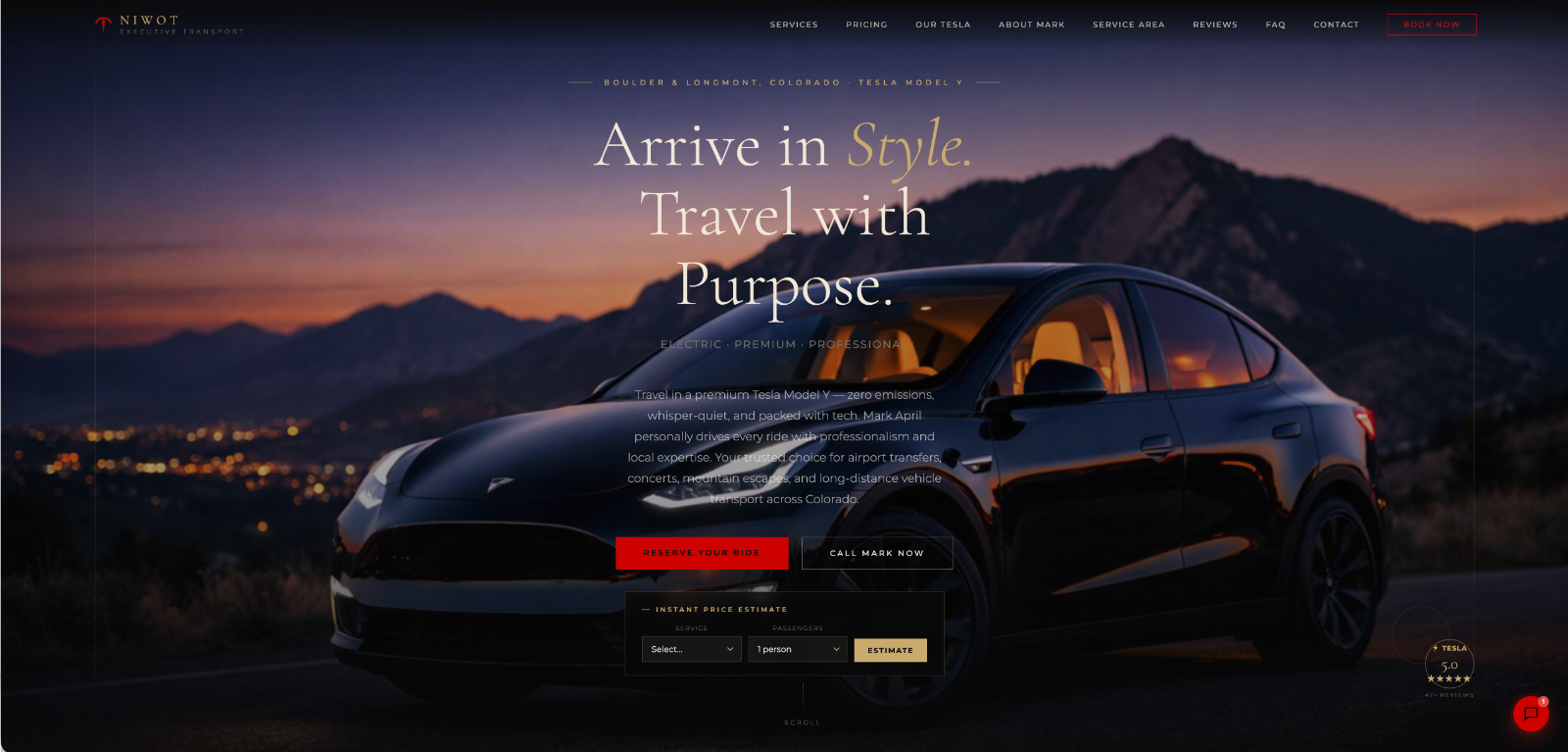
NNiwot Executive Transport
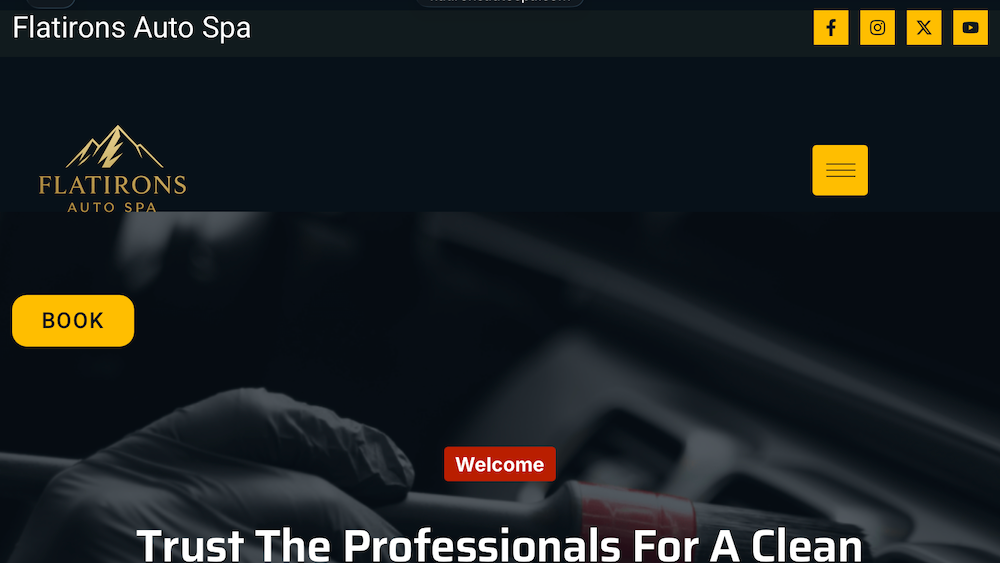
FFlatirons Auto Spa
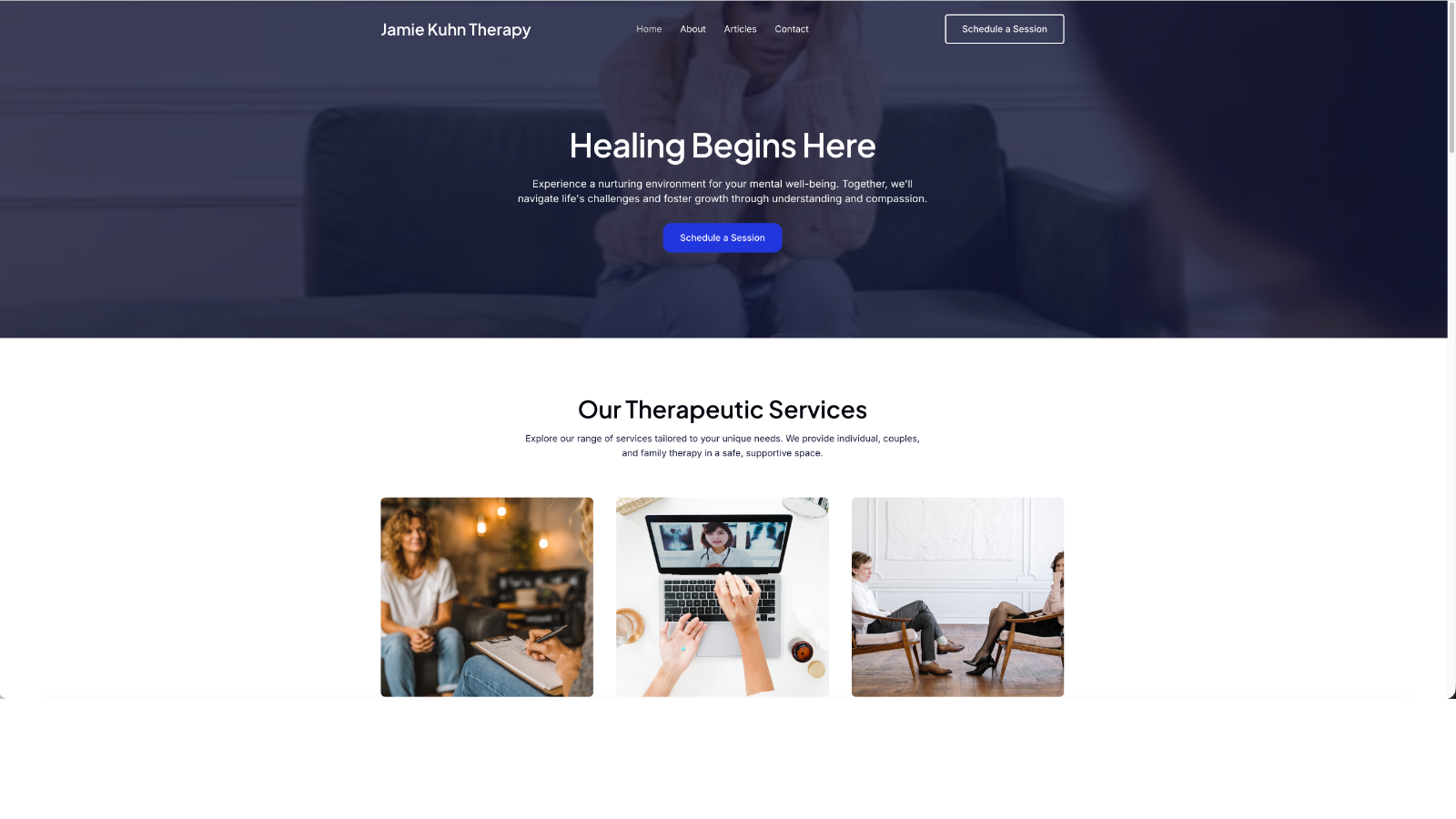
JJamie Kuhn Therapy
LLinda Faul Art
WWestern Sun Construction
NNiwot Executive Transport
FFlatirons Auto Spa
JJamie Kuhn Therapy
LLinda Faul Art
WWestern Sun Construction
Why us

Senior work. Sensible pace.

A small studio by design.

Two senior practitioners, end-to-end. Every brief is handled by the people you meet in the first call — no middle layer, no juniors learning on your dime.

Meet the team

AI, with judgement.

We use AI every day — but only where it earns its keep. The work still ships because a senior human signed off, not because a model guessed well.

Our AI services
5
Years in the studio
20
Projects shipped
Average conversion lift
95%
Clients who come back
Process

Four phases. Nothing precious.

01

Discover

We talk. We look at what you have, what's working, what's quietly failing. One week, no proposal deck theatre.

02

Design

Strategy, brand, interface — the thinking and the making in the same room. Reviews weekly, decisions daily.

03

Build

Modern stacks, clean code, real performance budgets. Built to last longer than the average agency's support window.

04

Measure

We stay on. Monthly reports you can read. Quarterly reviews with actual numbers, actual next moves.

Testimonials

What clients say after launch.

"

Flatirons built us a site that actually converts. Clean, fast, and launched on time. The kind of work you rarely get from a studio this small.

Maya Chen
CEO · Altitude Wellness
"

The AI Clarity audit surfaced problems we didn't know we had. Two months later we show up in ChatGPT answers for our category. Huge.

Theo Park
Head of Growth · Ridge Labs
"

Honest, senior, quietly brilliant. They don't sell you things you don't need and they'll tell you if we're not the right fit. Rare.

Ana Delgado
Founder · Delgado & Co.

Have a project in mind? Let's talk.

30-minute intro call. No pitch, no deck — just whether we're a fit and what the honest path looks like from here.

Services

What we do, and how.

Five disciplines, delivered by one senior team. Mix them, match them, or start with the one that's keeping you up at night.

01 / Web design & build

Marketing sites, product sites, apps

Design in Figma, engineered on Next.js or Astro, launched on Vercel or Cloudflare. Sites that load in under a second and convert better than whatever you have now.

From $15k · 4–8 weeks
02 / AI Clarity Index

Be findable to every model

We probe ChatGPT, Gemini, Perplexity, Claude and Copilot for how they see your brand, what they get wrong, and where competitors are eating your answers. Then we fix it.

From $4k · 2–3 weeks
03 / SEO retainer

Technical + editorial, monthly

Fixes, content, internal linking, backlinks — no tricks, no black hats, no surprises. Monthly reports short enough for the founder to actually read.

From $3k/mo · 6 months minimum
04 / AI productivity

Agents, workflows, internal tools

Pick a team. Pick a workflow. We'll build the tool that gives them four hours a week back — and the documentation to keep using it after we leave.

From $8k · 3–6 weeks
05 / Custom SaaS

From prototype to production

Modern stacks you can hire for. Clean data models, real auth, proper observability. Launch the MVP in 12 weeks, keep us on retainer for the next year.

From $40k · 10–14 weeks
What's actually keeping you up at night?
Honestly? AI visibility.
06 / Not sure yet?

Start with a conversation

30 minutes, no prep needed. We'll tell you what we'd do if we were you — even if the answer is "not Flatirons."

Free · Same week
Back to blog
AI Clarity

Why your brand isn't showing up in AI searches.

Mar 2026 · 8 min read

Six real issues we keep finding in audits — and how to fix each without rewriting your whole site.

Your customers used to find you by typing "best [whatever you do] near me" into Google. Now they're asking ChatGPT, Perplexity, or the AI Overview that sits above Google's ten blue links. And your name isn't the one coming back.

This isn't an SEO problem. AI models read the web differently than Google's crawler — they pull from a narrower set of signals, they're allergic to marketing fluff, and they weight third-party citations higher than anything on your homepage. Most small business sites were built for a search engine that's being replaced.

We run AI visibility audits through AI Clarity Index, and the same six issues come up over and over. Here they are, with the smallest fix that moves the needle on each.


1. Your site doesn't say what you actually do

Metric: ECS (Entity Clarity Score)

AI models need to answer what is this? before they can recommend you. If the answer requires clicking through three pages and interpreting a tagline like "Crafting Smiles Since 1998," the model gives up and recommends the competitor whose homepage opens with "Family dentist in Boulder, CO. Accepting new patients."

Fix: In the first screenful of your homepage, say what you do, where, and who for — in plain language. Match it in your <title> and meta description. One hour of work, highest-ROI change on this list.


2. Your services aren't on real pages

Metric: SAS (Service Association Score)

A "Services" dropdown with six nouns isn't enough. AI can't confidently associate your brand with a service it can't read about. Google would rank a thin page on backlinks alone. AI won't — it's reading the page, not the link graph.

Fix: Each core service gets its own page. Two to four hundred words. What it is, when you'd need it, what's included, how to get started. Structured like a customer would ask about it.


3. Your citations live only on your own site

Metric: NCS (Network Citation Score)

AI weights what other sites say about you — industry directories, local listings, niche publications, Reddit threads, podcast notes, review platforms. If the only place on the internet that mentions you is you, the models treat you as thin.

Fix: Pick five places your ideal customer would plausibly look for a recommendation and make sure you're listed accurately. Then aim for two or three external mentions per quarter — a trade publication quote, a guest post, a podcast. Consistency over volume.


4. Your reviews are thin or stale

Metric: CMV (Customer Mention Volume)

40 reviews from the last 18 months reads as real. 8 reviews from three years ago reads as defunct. The AI doesn't know you're still operating unless something recent tells it so.

Fix: Pick one review platform that matters for your industry and ask every customer, every time. A one-sentence post-service email with one button beats any fancy automation. Two reviews a month beats 30 once.


5. Your content doesn't answer real questions

Metric: CCI (Content-Citation Index)

"Five Benefits of Regular HVAC Maintenance" doesn't get cited, because nobody asks it. What gets cited is content that answers what a real person types into ChatGPT: "How much does commercial HVAC maintenance cost in Denver?" "Do I need a permit to replace a water heater in Boulder County?"

Fix: List the ten questions your customers actually ask before hiring you. Write a short, honest answer to each. Publish as individual pages. Link them from your service pages.


6. You don't look like a real business

Metric: DRI (Domain Reputation Index)

Boring infrastructure matters. Domain age. NAP consistency across the web. SSL. Privacy policy. A real founder or owner name somewhere. All of this feeds a signal that says legitimate business, not a Vercel template spun up last Tuesday.

Fix: Audit the basics. Address and phone on every page, matching Google Business Profile and Yelp. Real About page. SSL. Privacy and terms pages. None of this needs to be pretty — it needs to exist.


What to do Monday morning

Don't rewrite your site. Pick one issue and spend a week on it. Then the next.

Ranked by effort-to-impact for a typical small business:

  1. Rewrite your homepage hero (ECS) — 1 hour
  2. Ask your last 20 customers for a review (CMV) — 1 afternoon
  3. Answer the ten real questions customers ask (CCI) — 1 week
  4. Build proper service pages (SAS) — 1–2 weeks
  5. Pursue five external citations (NCS) — 1 quarter, ongoing
  6. Audit trust signals and infrastructure (DRI) — 1 day

None of this is a rewrite. All of it compounds.


Want to see how your site actually scores? We run full AI visibility audits at AI Clarity Index — ECS, SAS, NCS, CMV, CCI, DRI, with a ranked list of fixes specific to your site.


Back to blog
Process

What a senior studio actually does differently.

Feb 2026 · 6 min read

No account managers, no pitch decks, no scope creep. What that buys you in practice — and what it doesn't.

"Senior studio" is one of those phrases that sounds like it means something until you try to pin it down. Every agency on earth claims senior talent. Most of them mean we have senior people somewhere in the building, who will occasionally look at your project between other meetings.

That's not what we mean. Flatirons Creative Studio is a senior studio in a narrower, more literal sense: the person you talk to is the person doing the work. There's no account manager in between, no pitch deck to sit through, no ten-page SOW that leaves room for three rounds of "discovery" before anyone writes a line of code.

That sounds nice on a homepage. In practice, it means specific things change about how a project runs — some of which you'll love, and some of which will not be a fit. Here's what you actually get, and what you don't.


What you get

You talk to the person building it. When you explain what you want, you're explaining it to the person who will open the editor the next morning. No telephone game. No "let me check with the team and get back to you." Decisions that would normally take a week of internal back-and-forth happen in the same conversation that raised them.

The scope is the scope. Senior studios don't run on billable-hour economics, so there's no structural incentive to find more work inside your project. When we quote something, we quote what it takes to ship it well. If the work turns out to be smaller than expected, you don't pay more. If it turns out to be larger because we missed something, that's on us, not you.

Writing and thinking come first, code second. A lot of what a senior person brings isn't technical chops — it's the instinct to stop and ask whether you're solving the right problem before you start typing. Most bad software projects fail because the wrong thing got built well, not because the right thing got built poorly. We spend the first week of most engagements arguing the brief before we touch the work.

The thing ships. This sounds too basic to mention until you've been through a stalled agency project. Senior studios ship because the person running the work has enough context to make hundreds of small judgment calls without asking for permission. Junior teams escalate; senior teams decide. Most of what separates a project that ships in six weeks from one that stalls at twelve is the volume of decisions made without a meeting.

You get told no. We'll push back on feature requests that don't belong, timelines that aren't realistic, and ideas that sound fun but won't move your business. This is the part agencies with account managers structurally can't do — the account manager's job is to make you happy, not to tell you when you're wrong. Ours is to ship something that works, which occasionally means disagreeing with you.


What you don't get

A pitch deck. If you need a 40-slide proposal with a branded title page before you can move forward, we're not your fit. Our proposals are a one-page document that says what we'll do, when it'll be done, and what it costs. Procurement departments sometimes hate this. That's fine — we're not trying to win RFPs.

Scale. One founder, a small bench of specialists brought in when the work calls for them. We turn down more work than we take, because we'd rather do three projects well than ten projects adequately. If your project requires a team of twelve starting next Monday, we're not set up for that, and you should go hire the agency with twelve people sitting bench.

Hand-holding. Senior studios assume you know your business and can make business decisions fast. We'll bring opinions, but we won't run you through a "stakeholder alignment workshop" to find them. If your organization needs a lot of internal ceremony around decision-making, the speed advantage of working with a senior studio evaporates — you'll feel like we're moving too fast, and we'll feel like you're moving too slow.

A project manager. We don't have one. For projects under a few months, you don't need one — direct communication and a shared doc outperform any PM tool. For projects that genuinely need project management (multi-team coordination, long timelines, heavy stakeholder surface area), a senior studio is the wrong shape, and we'll tell you.

Twenty-four-seven availability. We answer fast during working hours. We don't pretend to be on call. The tradeoff for working with someone senior enough to make real decisions is that they also have boundaries that make the work sustainable. A team you can reach at 11pm is a team that will burn out and ghost your project at month four.


When a senior studio is the right fit

The clearest case: you're a founder or operator who knows what you need, can make decisions without three rounds of committee, and wants the work done well and done now. You've been burned by agencies before — too many meetings, too many people, too much process, too little momentum — and you want something that feels like hiring a trusted contractor, not a vendor.

The worst fit: large organizations that need extensive reporting, formal change control, or a named account team. Nothing wrong with needing those things. They just aren't what a senior studio is built to deliver, and pretending otherwise wastes everyone's time.


The honest summary

Working with a senior studio means you're paying for judgment, not hours. The person you hire is both the strategist and the builder, which is faster and sharper than the alternative — but only if you can match that pace on your side. The fit is either really good or really off. There isn't much middle ground.

If any of this sounds like how you already wish your projects ran, let's talk. If it doesn't, there are excellent agencies built for the other model, and we'll happily point you toward one.

Back to blog
AI productivity

The four AI workflows worth building first.

Jan 2026 · 10 min read

From briefs we've scoped over the last year — the ones that actually saved teams real hours.

Most of what gets written about "AI for business" falls into two piles. One pile is the strategy piece, full of phrases like augmented intelligence and operational leverage, that never actually tells you what to build. The other pile is the tools list — 47 AI tools to try this week — that confuses having software with having a workflow.

We've scoped dozens of AI automation briefs at Flatirons Creative Studio over the past year. Most proposed ideas don't survive the first conversation. A few do, and those are the ones that quietly give teams back serious hours every week once they're running.

Here are the four we recommend building first, in roughly the order that makes sense for most small and mid-sized businesses. None of them require a custom GPT or an "AI transformation." All of them earn their keep in the first month.


1. Inbound lead triage and first-touch drafting

What it does: When a new lead comes in — form fill, email, LinkedIn message, whatever — an AI workflow reads the content, pulls whatever public information exists about the person or company, scores the lead against your actual criteria, and drafts a personalized first-touch reply. A human reviews and sends.

Why start here: Every SMB we've worked with is leaking at the top of the funnel. Leads sit for two days. The person handling them is context-switching between six other things. The reply they eventually send is generic, because writing a real one would take fifteen minutes they don't have. AI closes all three gaps in one motion.

What it actually saves: We've seen teams go from 36-hour first-touch times to under 2 hours, with the reply quality going up, not down. The reason quality goes up is that the model has time to look things up that a human wouldn't. It reads the prospect's LinkedIn. It checks their company site. It notices they mentioned something specific in the form and responds to that, instead of sending a templated "thanks for your interest."

What's actually hard about it: Getting the scoring right. Most teams haven't actually written down what makes a good lead. The workflow forces that conversation, which is half the value.

Tools that matter here: Anything that can trigger on a form submission or inbound email and call an AI model. n8n works fine for this if the integrations are simple; Trigger.dev is better if the logic is complex or you want to version-control it like real code.


2. Meeting to followups to CRM

What it does: You have a call. A transcript is generated automatically. An AI workflow reads the transcript, drafts the followup email, extracts any commitments you made ("I'll send over the pricing deck by Friday"), creates tasks for each, and updates the relevant CRM record with a summary.

Why it's worth it: This is the single biggest time sink we find when we scope operations briefs. A sales or client-facing person has four calls a day. Each call produces 15–30 minutes of after-work: writing the followup, updating the CRM, making sure nothing fell through the cracks. That's two hours a day. Ten hours a week. Five hundred hours a year. And most of it doesn't happen consistently, which means things fall through the cracks anyway.

What it actually saves: Done well, this collapses two hours into ten minutes of review. The person reads the draft, approves or tweaks it, and the rest is automated. The larger benefit is that nothing falls through anymore — every commitment made on every call is captured and tracked.

What's actually hard about it: Getting the transcript quality right, and getting the CRM integration right. Transcripts from Fathom, Fireflies, Granola, or similar tools are mostly fine now; five years ago this workflow would have failed because the transcription was too bad. CRM integration is still annoying — Salesforce, HubSpot, Attio, and Pipedrive all handle this differently, and some of them charge extra for API access to the fields you need.

Tools that matter here: A transcription tool (Fathom/Granola/Fireflies), an AI layer to process the transcript, and direct API access to your CRM. Avoid "AI-native CRMs" that promise to do all of this for you out of the box — they tend to do each piece worse than a focused tool would.


3. Content repurposing (one source, many formats)

What it does: You produce one piece of high-effort content — a podcast episode, a long-form blog post, a webinar, a founder interview. An AI workflow turns that single source into a week's worth of derivative content: LinkedIn posts, email newsletter sections, short-form video scripts, tweet threads, quote cards.

Why it's worth it: Most marketing teams in SMBs publish sporadically, because creating good content is expensive and repurposing it manually is tedious. They have one great podcast episode and then they move on to the next one, instead of mining it for the six other pieces of content it could easily produce. AI makes repurposing cheap enough that it actually happens.

What it actually saves: A marketing manager who used to publish one LinkedIn post a week from original thinking can now publish four — three of which are derivative of something that already existed. The key phrase is derivative of something real. This is not AI writing from scratch; this is AI reshaping something the team already said, in the team's actual voice.

What teams get wrong about this: Almost everyone's first attempt is "AI, write me a LinkedIn post about X." That's the wrong shape. The right shape is "here's a 40-minute conversation we had, find the three most interesting moments, and turn each one into a post that sounds like the person who said it." The source content has to be real; the AI is a reshaper, not a creator. Teams that skip the source content step end up publishing AI slop that nobody reads.

Tools that matter here: This is one of the few workflows where a thoughtful human-in-the-loop matters a lot — a structured editor interface (Notion, Airtable, or a custom workflow) that shows the source content and the drafts side by side, so someone can approve or edit each piece in 90 seconds instead of 10 minutes. The AI part is easy. The review interface is what determines whether this workflow survives past month two.


4. Internal knowledge retrieval

What it does: Your team's institutional knowledge — SOPs, meeting notes, past proposals, customer data, product documentation — is scattered across Google Drive, Notion, Slack threads, and a few people's heads. An AI workflow makes that knowledge searchable in natural language. Someone types "what did we decide about pricing for annual contracts last quarter?" and gets the answer with links to the actual source documents.

Why we put it last: This is the workflow that most SMB leaders want to build first, and it's the one we usually recommend building last. The reason is that most teams don't have the knowledge organized well enough for AI retrieval to work. Garbage in, garbage out — if your SOPs are out of date and your Slack history is where important decisions live, the AI is just going to confidently quote stale information at you.

What it actually saves: Real hours, once the underlying documentation is in decent shape. Onboarding new employees gets dramatically faster. Institutional memory stops evaporating when someone leaves. Decisions stop getting re-litigated because nobody can remember what was agreed last time.

What teams get wrong about this: They build the AI layer before cleaning up the knowledge layer. Then they're disappointed that the AI gives bad answers, and they blame the model. The model is fine. The input is the problem. A smaller, cleaner, more current knowledge base produces better retrieval than a giant messy one.

Tools that matter here: This is one place where the hype cycle has gotten ahead of the product. Notion AI, Glean, and Guru all do parts of this well. So does a custom setup using your actual documents and a retrieval layer. We generally recommend starting with whichever tool is closest to where your knowledge already lives — if you're a Notion shop, start with Notion AI; if you're a Google shop, start with Gemini's workspace integration. Don't introduce a new tool to solve a knowledge problem; fix the knowledge, then add the AI.


The pattern across all four

These four workflows have one thing in common: they're all reshaping work the team already does, not inventing new work. The AI doesn't replace anyone, and it doesn't create net-new output from nothing. It takes a process that was slow, expensive, or inconsistent, and makes it fast, cheap, and reliable.

That's the shape of AI work that actually sticks in SMBs. The workflows that fail are the ambitious ones that try to replace a role or generate content from scratch. The ones that work are boring: triage, summarization, repurposing, retrieval. Boring compounds.

We scope AI automation briefs for SMBs at Flatirons Creative Studio. If any of these four are stuck on your team's "we should really build this" list, let's talk — most of these are two-to-four week builds, not multi-month transformations.

About

A small Boulder studio, quietly serious about the work.

Flatirons Creative Studio is two senior designers and engineers working out of a walk-up on Pearl Street. We've been at this, in various shapes, for 5 years.

How we work.

One team, one thread, one project at a time where possible. We take on fewer briefs than we could so the ones we do get the care they deserve.

Most of our clients are within driving distance — Boulder, Denver, Fort Collins — but the work's remote-friendly and we've shipped across three time zones when it matters.

How we charge.

Fixed-price for defined projects. Monthly retainers for ongoing work. Hourly only if you really want us to. No hidden rate cards, no surprises on the last invoice.

If the budget isn't there, we'll tell you on the first call — and usually know someone it is a fit for.

Contact

Let's make something. Say hello.

Tell us about the project — or book a free 30-minute call. We respond within one business day.

Project enquiry

No fields are mandatory except email. Tell us as much or as little as you like.

Web design
AI Clarity Index
SEO retainer
AI productivity
Custom SaaS
Not sure yet
Fastest way to start

Book a free 30-min call

Pick a time that works. We'll talk goals, fit, and whether we're even the right studio for you. If we're not, we'll tell you who is.

Open calendar
Studio

777 15th Street
Boulder, CO 80302

Phone

(720) 340-1005
Mon – Fri · 9–5 MT

Privacy

Privacy policy.

Last updated: March 2026. Plain-English version first; the legalese only where we need it.

What we collect

When you fill out our contact form, we collect your name, email, company, phone number (if provided), and anything you choose to tell us about your project. When you visit the site, we collect standard analytics (pages viewed, approximate location, browser) so we can understand what's useful.

How we use it

To reply to you, to schedule calls, and to run the studio. We do not sell your data. We do not share it with third parties except the tools that help us deliver the work (email, calendar, analytics, SMS delivery) — all of which have their own privacy policies.

SMS / text messaging

If you provide your phone number on our contact form and opt in, we may send you transactional SMS messages related to your inquiry or engagement with Flatirons Creative Studio — for example, appointment confirmations, project updates, reminders, and replies to questions you've sent us. We do not send marketing or promotional text messages.

Consent: By submitting your phone number and checking the SMS opt-in box on our contact form, you consent to receive transactional text messages from Flatirons Creative Studio. Consent is not a condition of purchase or any service.

Message frequency: Message frequency varies based on your engagement with us. You should not expect more than a few messages per month in the ordinary course.

Fees: Message and data rates may apply. Flatirons Creative Studio does not charge for SMS messages; your mobile carrier's standard rates apply.

Opt-out: You can opt out of receiving SMS messages from us at any time by replying STOP to any message. You will receive a one-time confirmation that you have been unsubscribed, after which we will no longer send you messages. Reply HELP for help, or contact us at [email protected] or (720) 340-1005.

Carriers: Carriers are not liable for delayed or undelivered messages.

Privacy & data sharing: We use Twilio to deliver SMS messages. Your phone number and the contents of messages may be processed by Twilio for the purpose of delivery. Mobile opt-in data and consent are never shared with third parties or affiliates for marketing or promotional purposes. See our full Privacy Policy for how we handle your information generally.

Cookies

We use a small set of cookies for analytics and to remember your preferences. No advertising cookies. No cross-site trackers.

Your rights

You can ask us to see what we have on file, correct it, or delete it. Email [email protected] and we'll respond within 30 days.

Contact

Flatirons Creative Studio
777 15th Street, Boulder, CO 80302
[email protected]

Terms

Terms of service.

Last updated: March 2026. Short, fair, human.

Using this site

You're welcome to read, share, and link to anything here. The studio name, logo, and written content are ours — please don't copy them wholesale or pass them off as yours.

Engagements

Nothing on this website is a contract. Actual engagements are governed by a separate statement of work that both parties sign before any paid work begins.

Work product & IP

Once a project is paid in full, you own the final deliverables. We keep the right to show finished work in our portfolio unless an NDA says otherwise — we'll always ask first.

Liability

The site is provided as-is. We do our best to keep it accurate and available, but we're not liable for indirect or consequential damages arising from your use of it.

Governing law

These terms are governed by the laws of the State of Colorado, USA.

Questions

Email [email protected] — we'll answer within one business day.